Transforming History: Faceting Vintage Coca-Cola Slag Glass
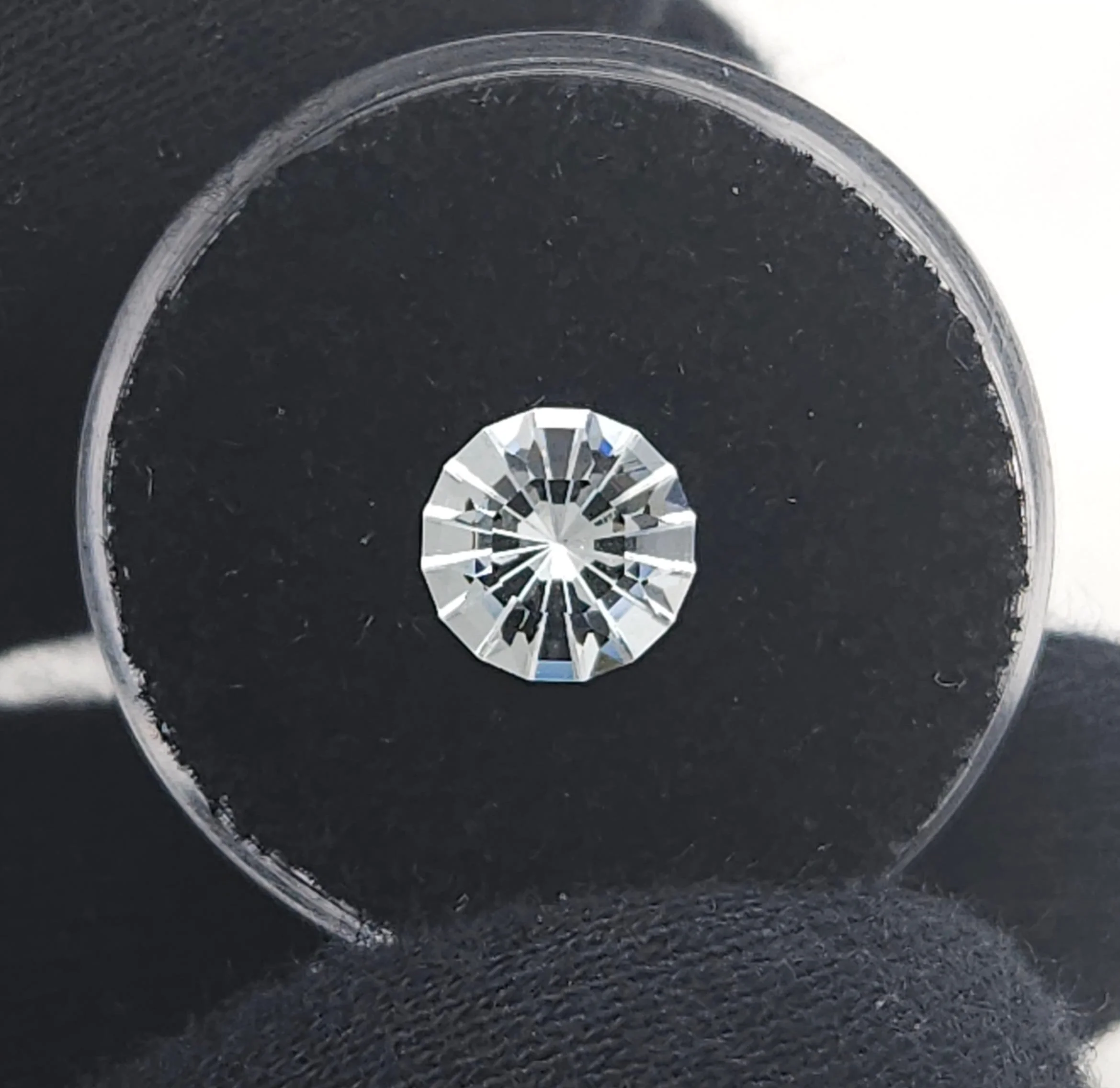
Working with unique lapidary rough is always a treat, but it’s extra special when the material comes with a rich piece of history attached.
Recently, I had the privilege of faceting a piece of vintage slag glass recovered from near an old Coca-Cola bottling plant. Holding raw glass with that iconic aquamarine tint felt like holding a small piece of American manufacturing history—and I couldn't wait to see how it would look on the gem display.
The Design Choice: Precision Meets Contrast
To bring out the absolute best in this piece, I chose a custom round design featuring frosted facets.
While clear glass can sometimes lose its definition once cut, introducing frosted facets creates a dramatic contrast with the polished surfaces. It breaks up the light, catches the eye, and truly makes the glass "pop" in a way a standard cut just can't match.
Navigating the Cut: Step-by-Step Lapidary Process
If you’ve cut glass before, you know it comes with its own unique personality and quirks. Here is how the sequence played out on the laps:
1. Roughing Out (250 Grit)
The Result: Fast material removal, but as expected with glass, it left noticeable chipping along the facet edges.
2. Refining (500 Grit)
The Result: The edges smoothed out significantly, though some micro-chipping was still present. It provided a clean foundation for pre-polish.
3. Pre-Polish: The Secret Sauce (3,000 Grit)
The Trick: The 3k lap is where the magic happens, but it demands total precision. If any part of the facet lifts off the lap even slightly, it will gouge the surface instantly!
The Result: Kept flat and steady, it leaves a pristine, chip-free finish that sets up the final polish perfectly. don’t rely on your depth indicator for this one set your angle just above the target and use the angle reader to lower it just below the target and then cut and look!
4. The Final Polish (60k Diamond)
The Choice: I know many lapidaries swear by cerium or tin oxide for glass—and while oxides work great, they can sometimes be unpredictable. I opted for 60k diamond powder, and it delivered a mirror finish with total control.
The Final Reveal
The end product speaks for itself. What started as an discarded piece of industrial rough from a Coca-Cola site is now a brilliantly faceted, light-catching gem.
It’s always rewarding to take a piece of forgotten history, put it on the laps, and give it a brand-new life!
Key Takeaways for Cutting Glass:
Keep firm, level pressure during the 3,000 grit pre-polish to prevent deep gouges.
Don't sleep on diamond powder for polishing glass—it offers reliable, consistent results if your pre-polish is flawless.
Experiment with frosted facets on lighter or clear materials to add texture and pop!