Custom Cabochon Cutting & Shaping Services
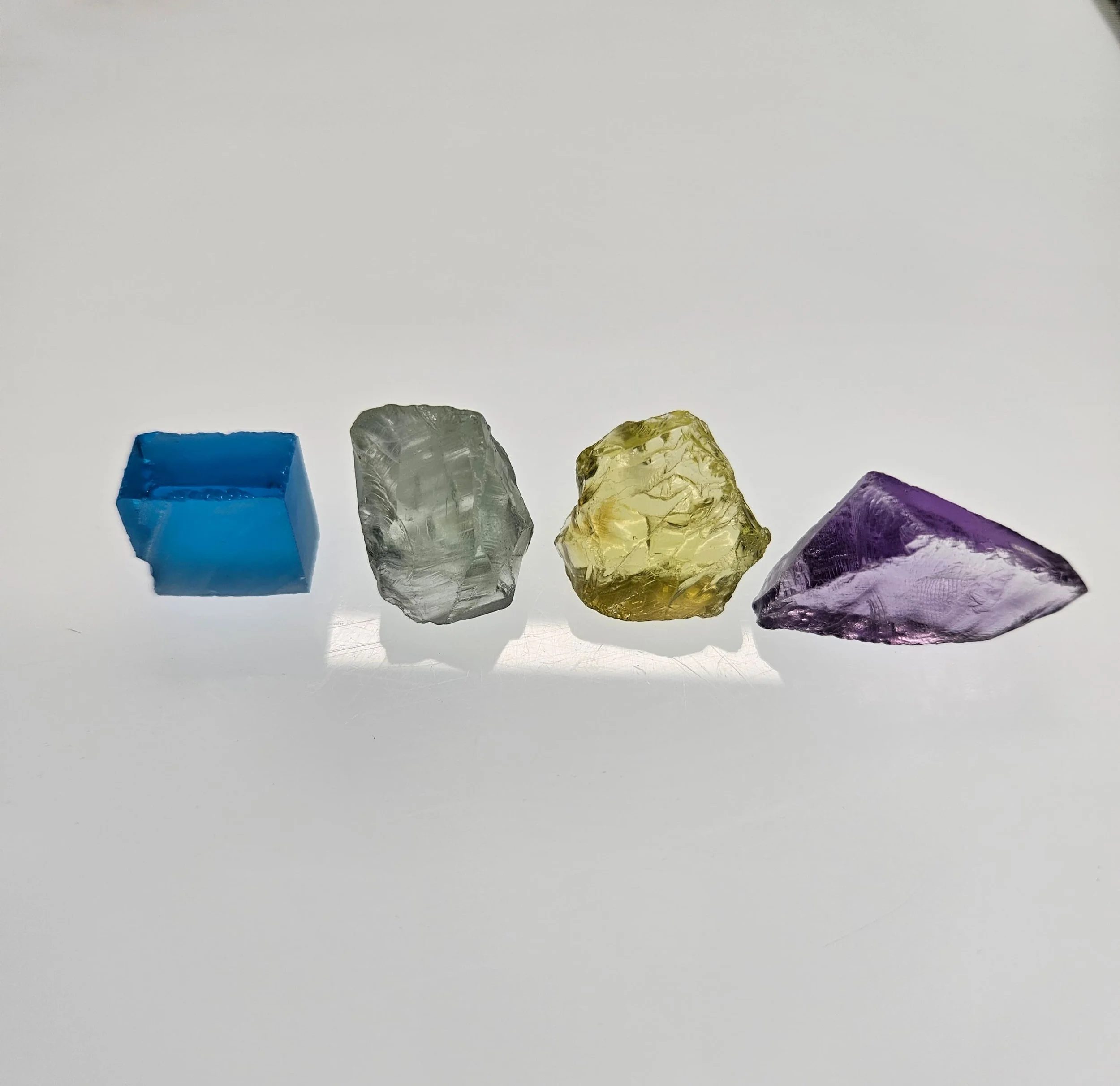
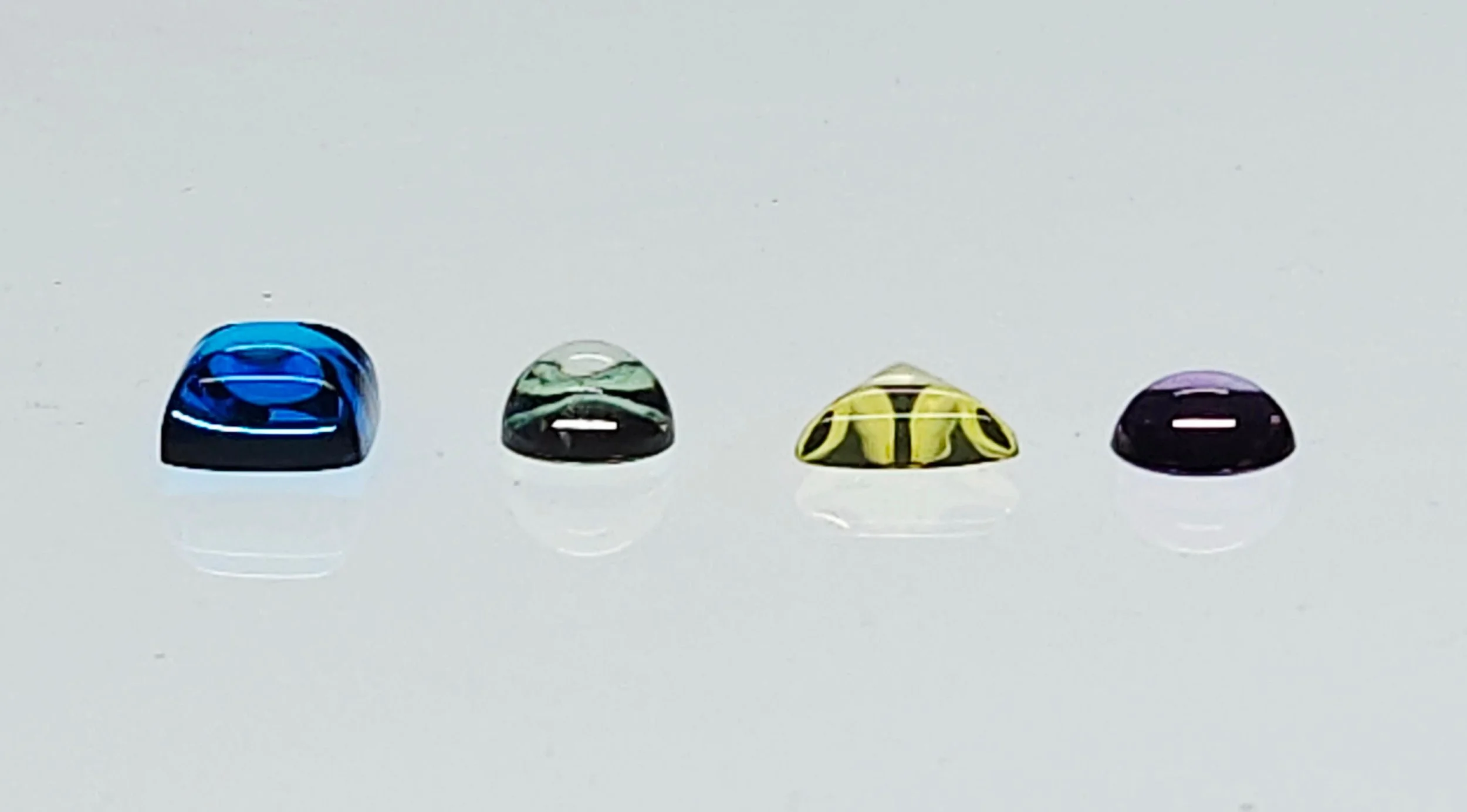
Send in your rough minerals or slabs and get expertly shaped, polished cabochons tailored for your jewelry designs. You can expect results like these.
Before
After

Precision Equipment & Gemological Testing
Step inside the studio: Where raw minerals transform into polished gems.
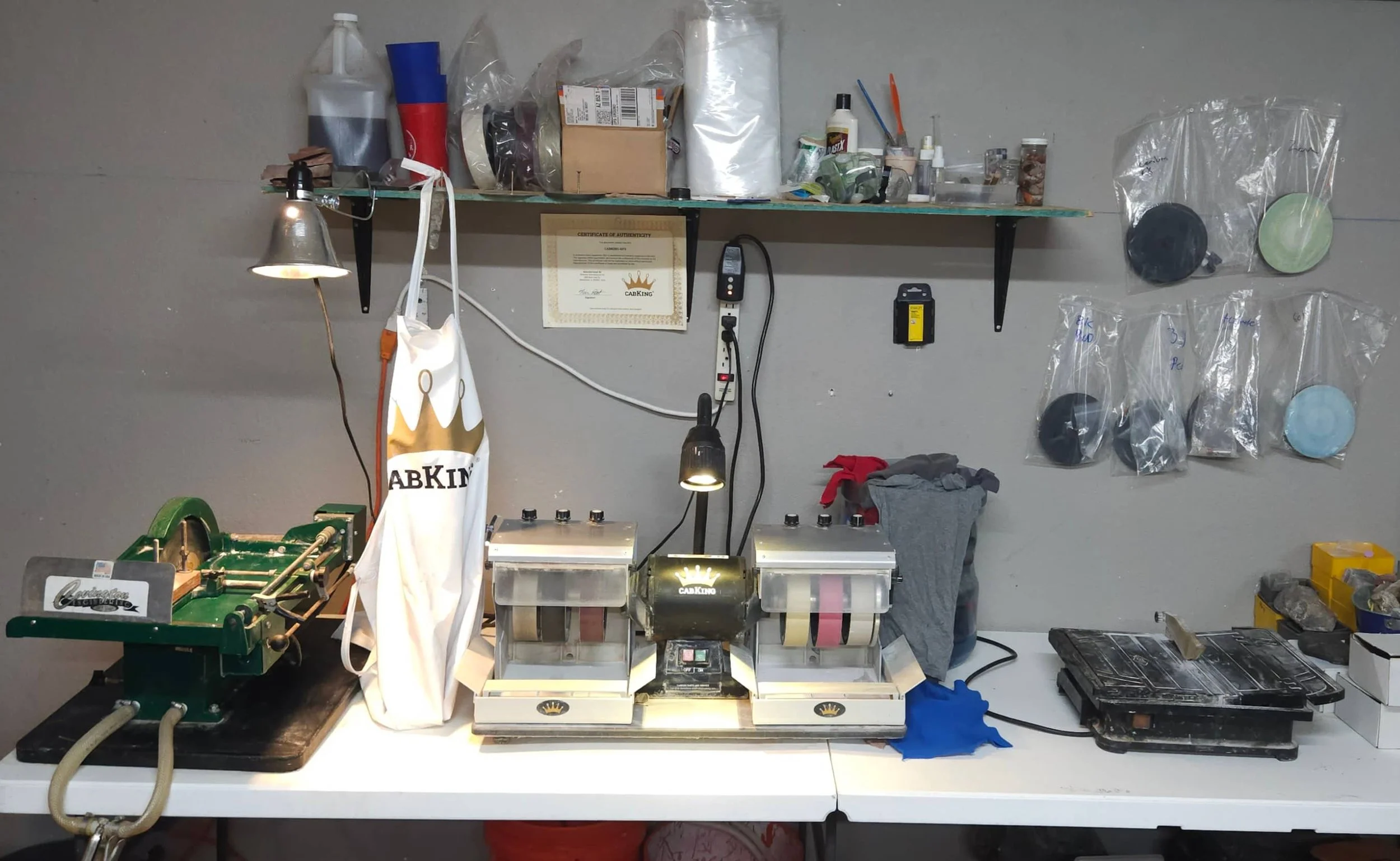
Featured equipment
10 inch slab saw
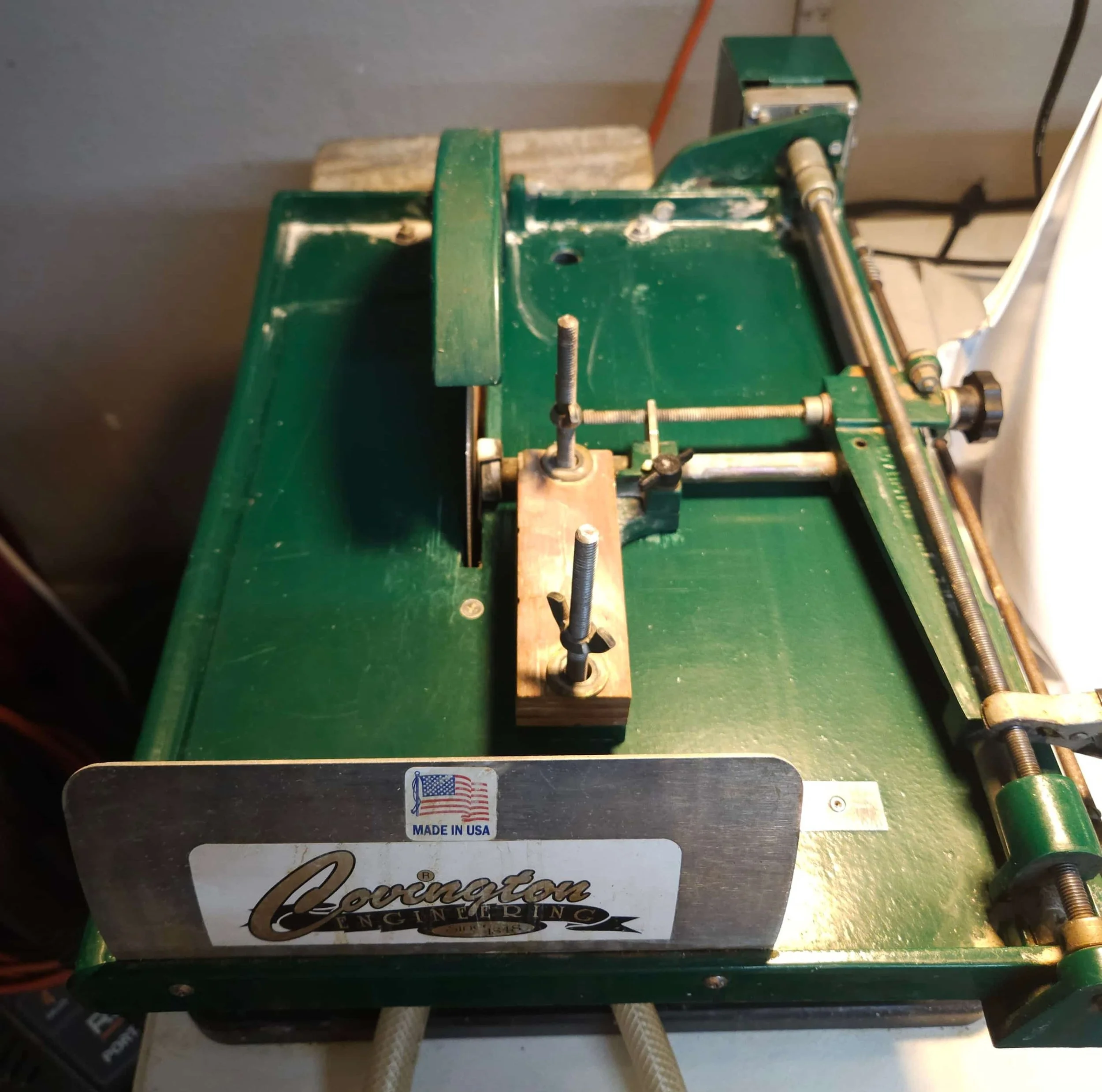
I cut rough minerals up to 5 inches thick on my 10-inch slab saw. Need larger material slabbing? I utilize 24-inch saws at my local gem and mineral club to handle massive pieces.
6 inch Cab King
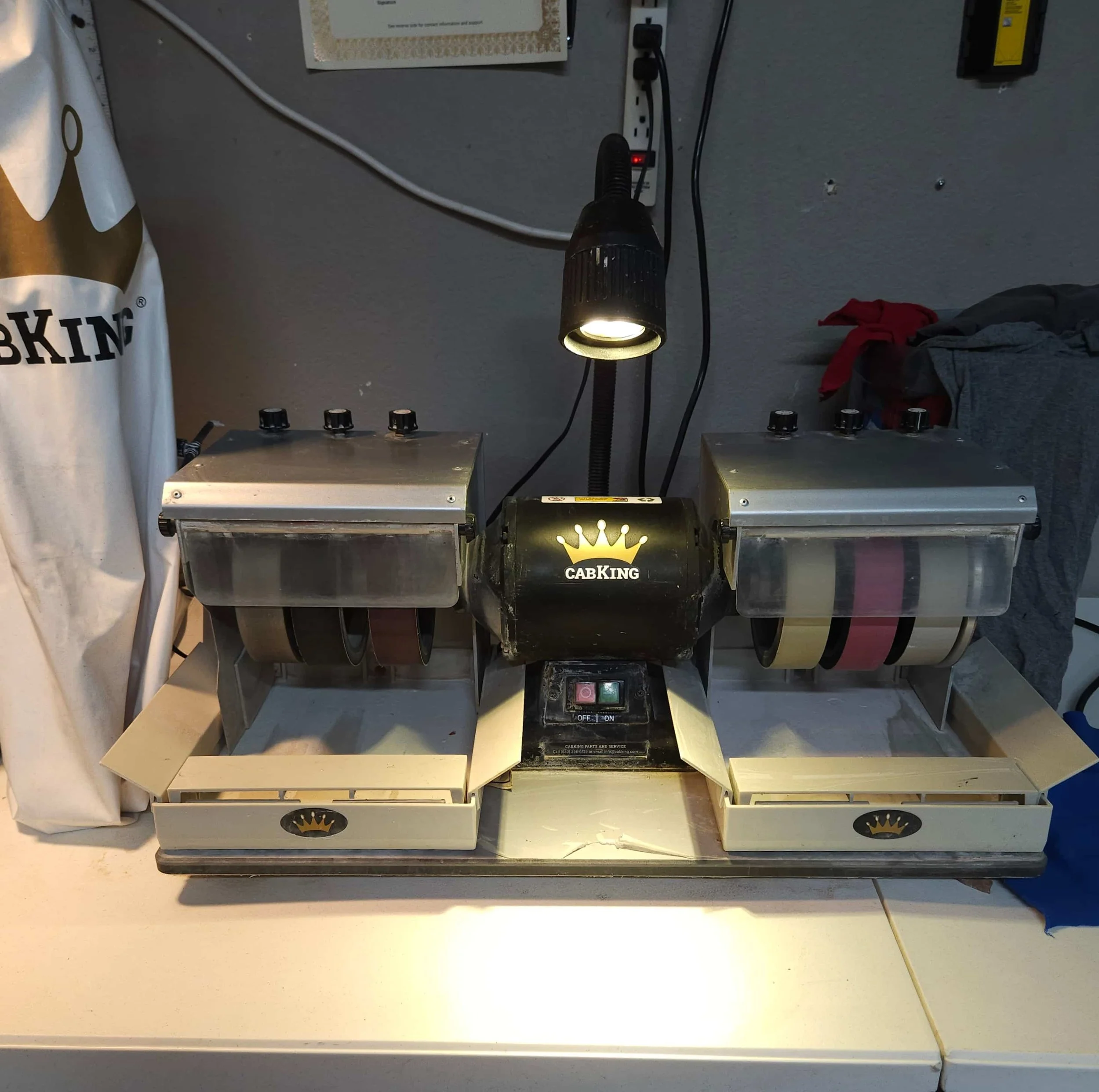
Workhorse of the shop: my 6-inch Cab King Cabbing Machine. I use a complete 6-stage diamond wheel sequence to shape, preform, smooth, and polish rough gems into custom finished cabochons.
4 inch trim saw
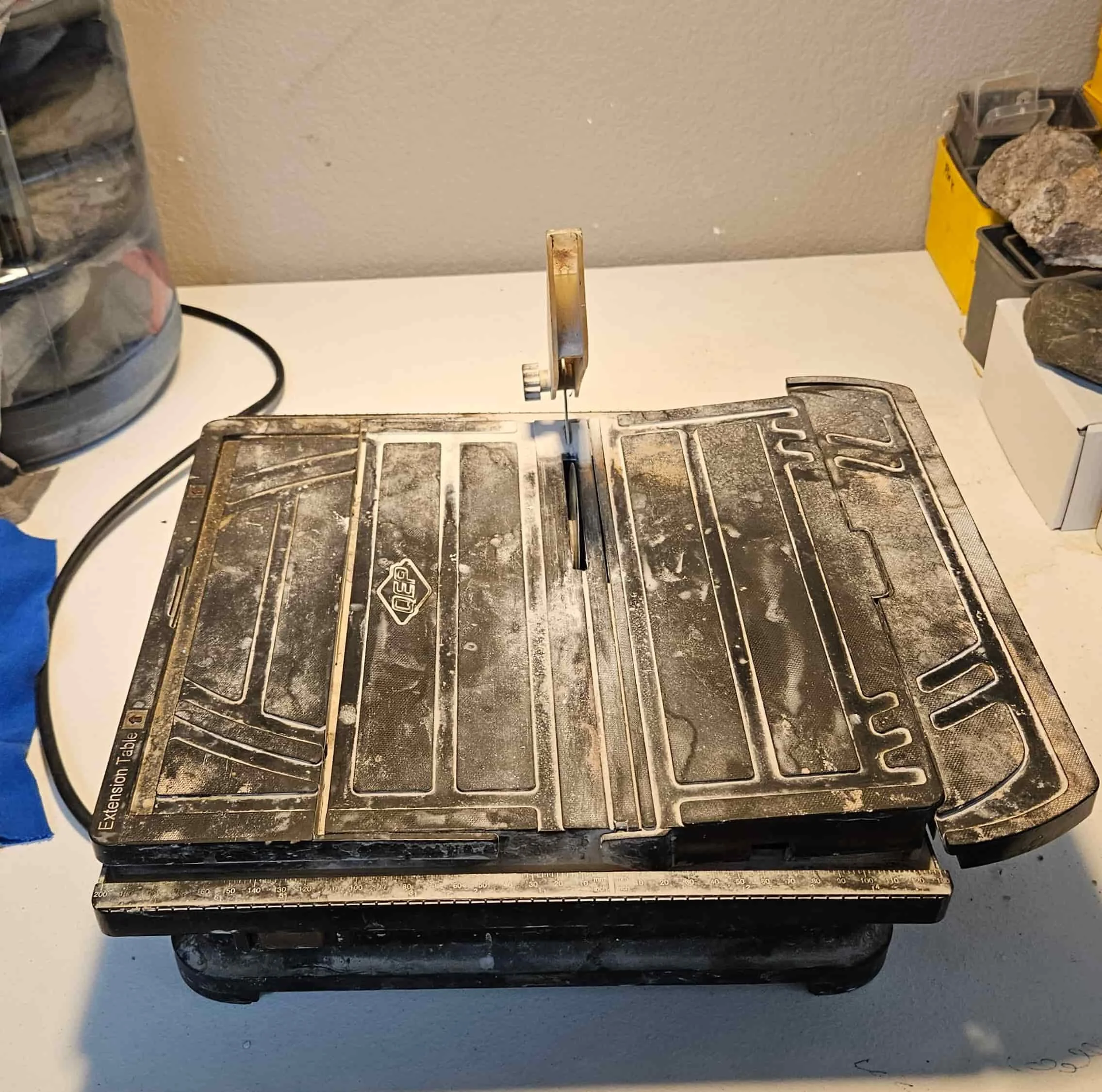
Equipped with a razor-thin 0.4mm blade, my 4-inch trim saw handles intricate cuts and delicate rough. She’s dirty because she stays busy cutting every day to maximize yield on precious stones.
Gemological testing
Every piece of rough that enters my shop is carefully evaluated before it hits a saw or grinding wheel. I run testing including specific gravity, Mohs hardness, microscopy, and refractive index (RI) analysis, backed by extensive gemological literature. While my findings are an educated opinion rather than a formal laboratory certification, this testing phase is essential—it tells me exactly how to handle, cut, and polish your material safely to get the best final result.
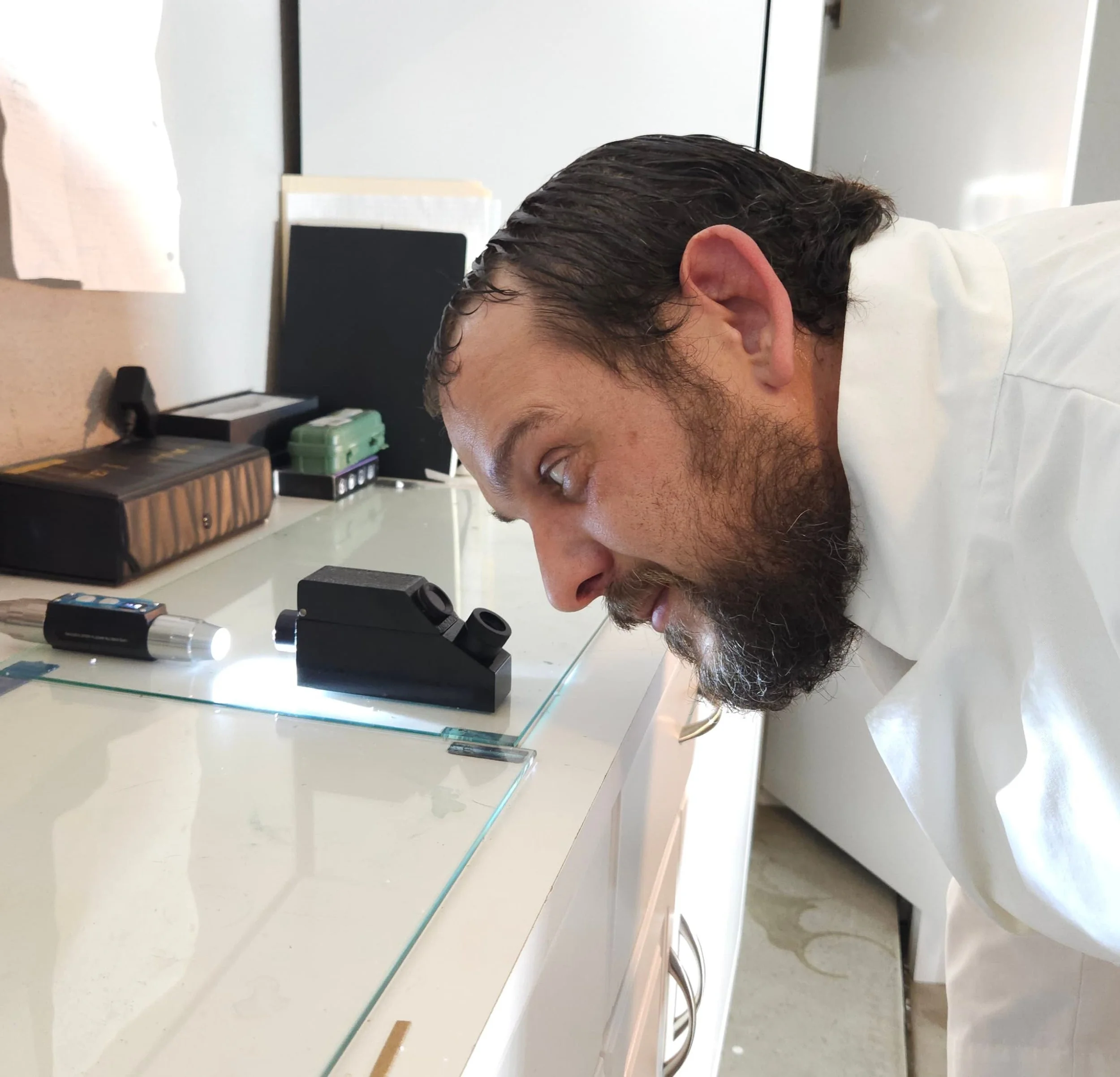
Refractive Index Test
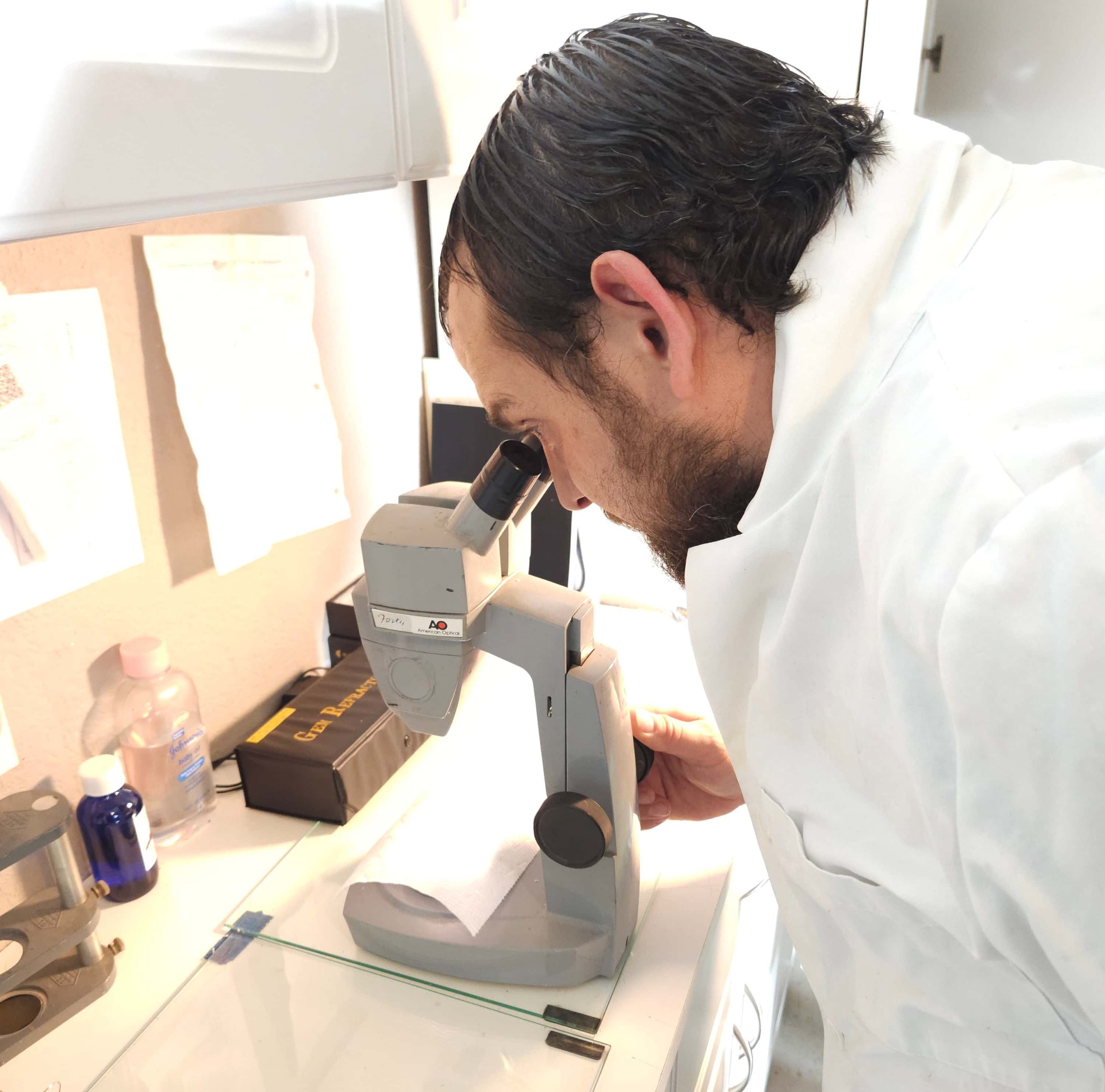
Microscopy
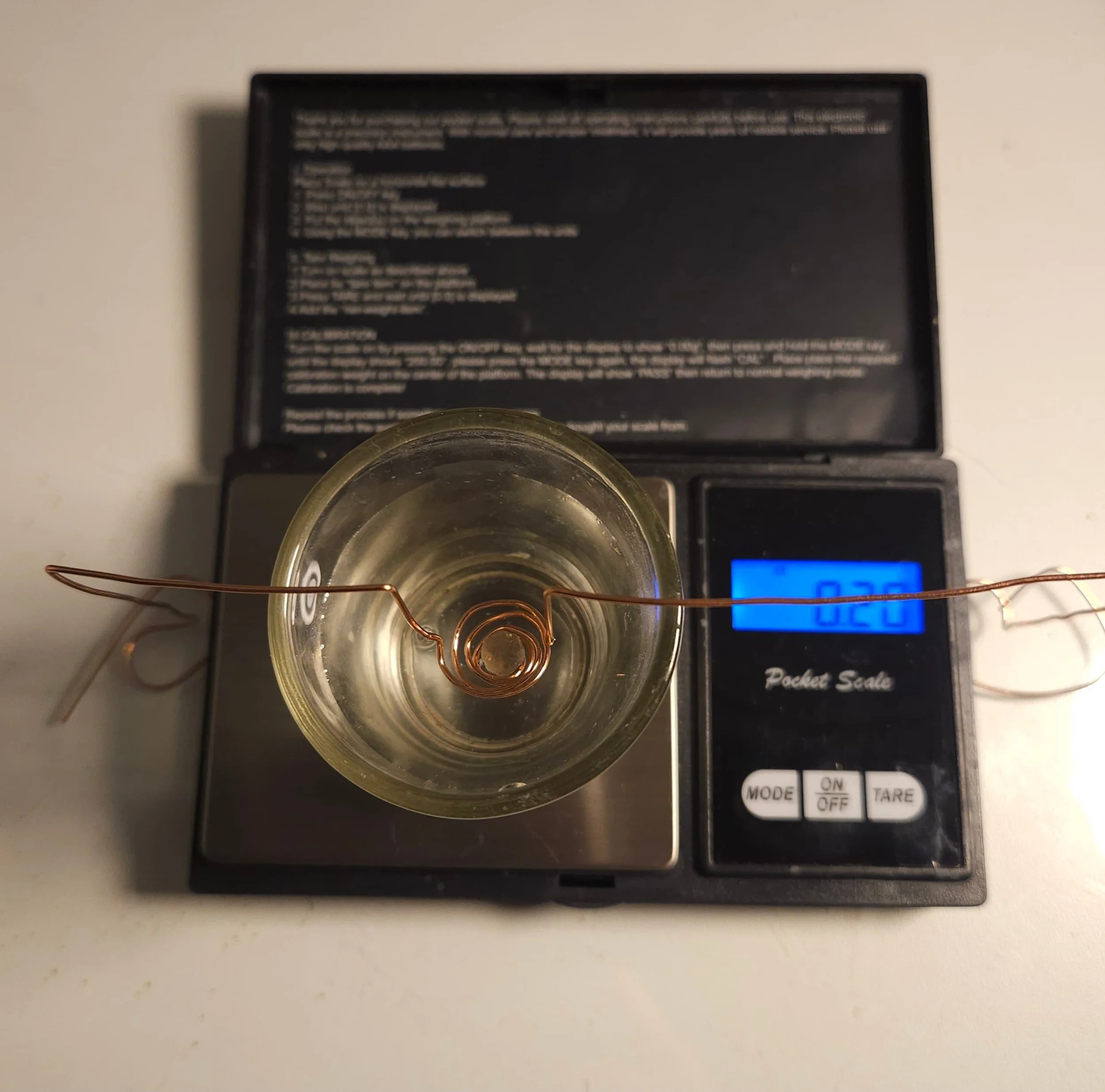
Specific Gravity Testing

Let's Cut Some Cabochons!
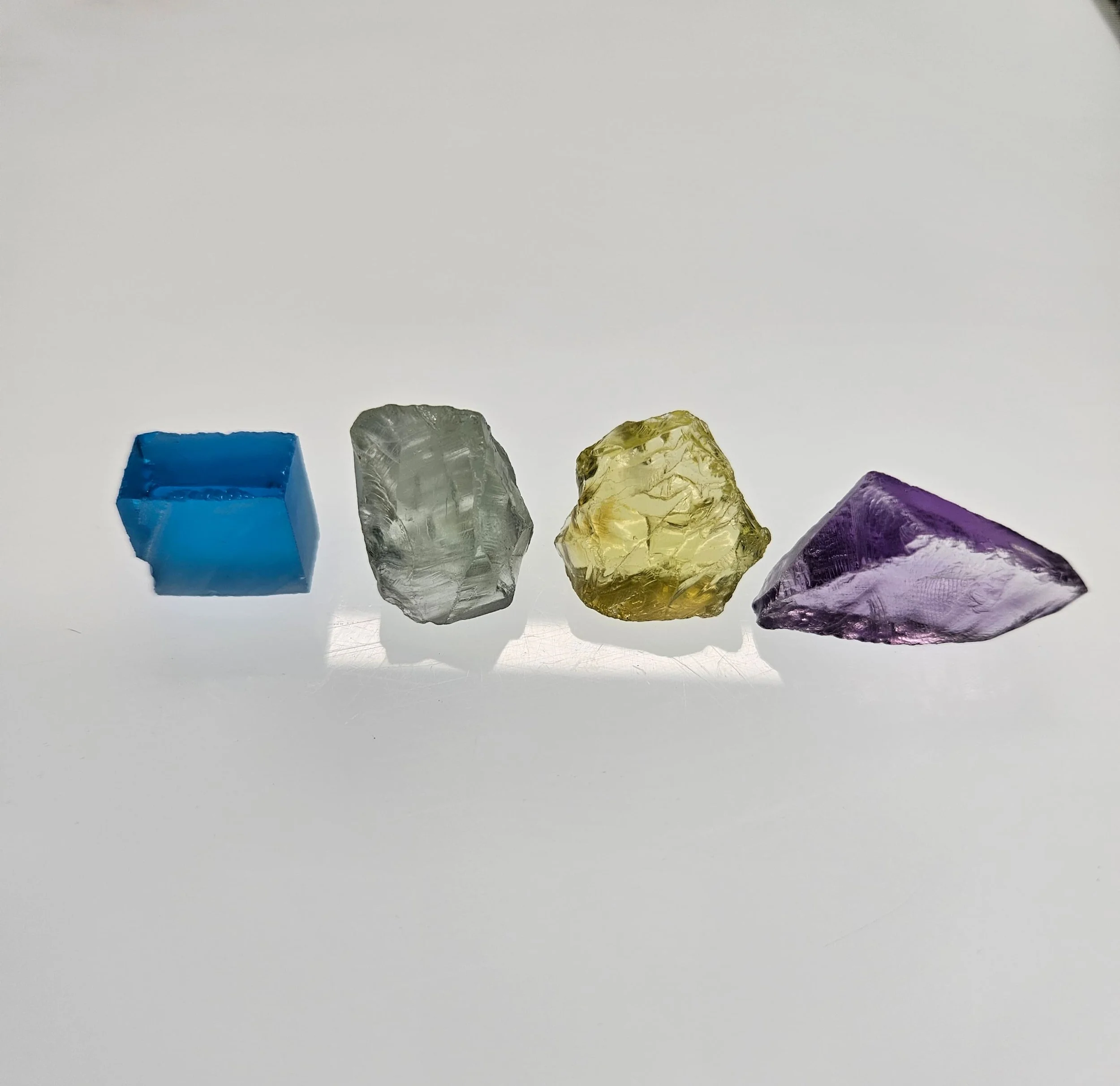
Start with raw material
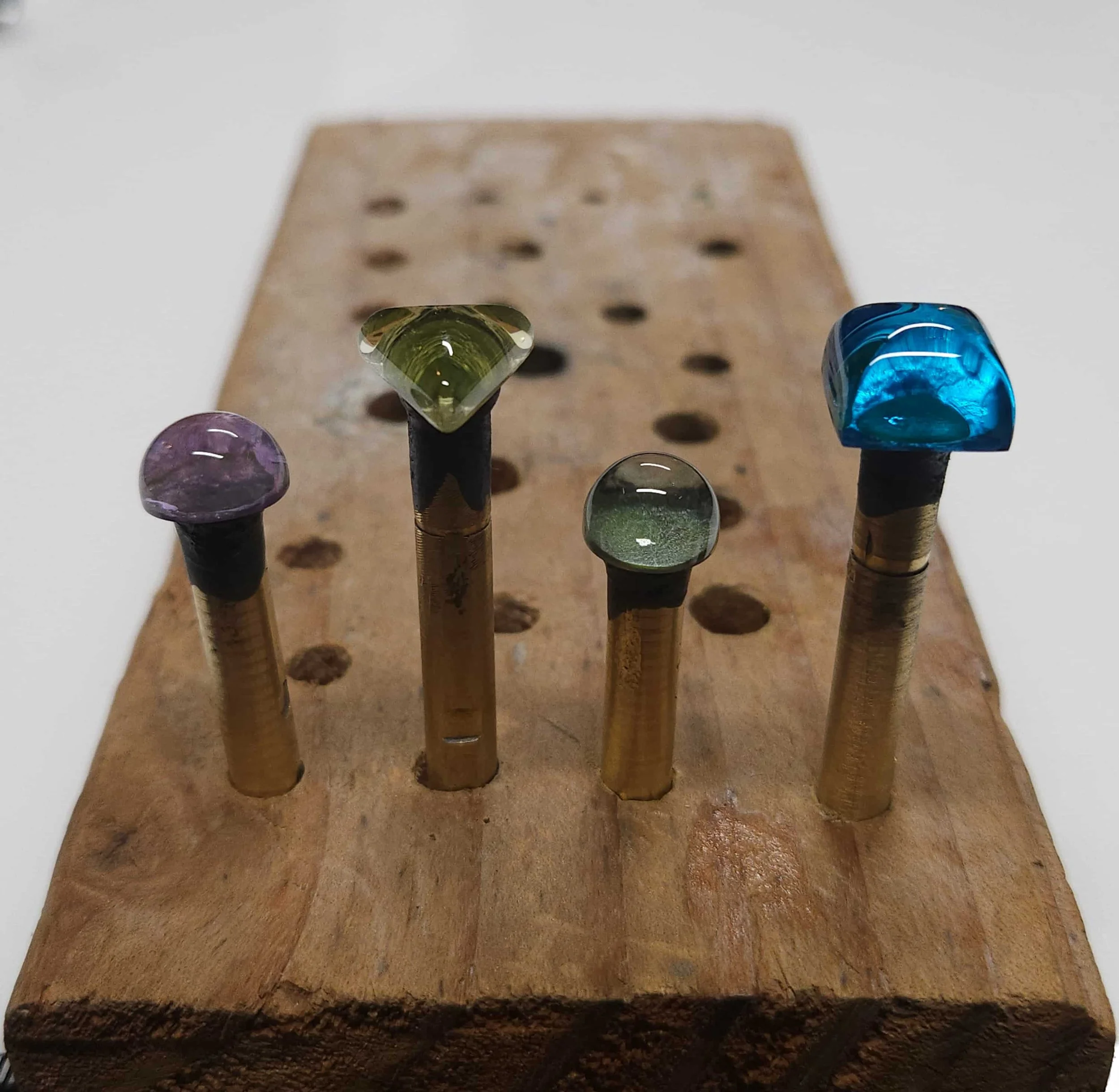
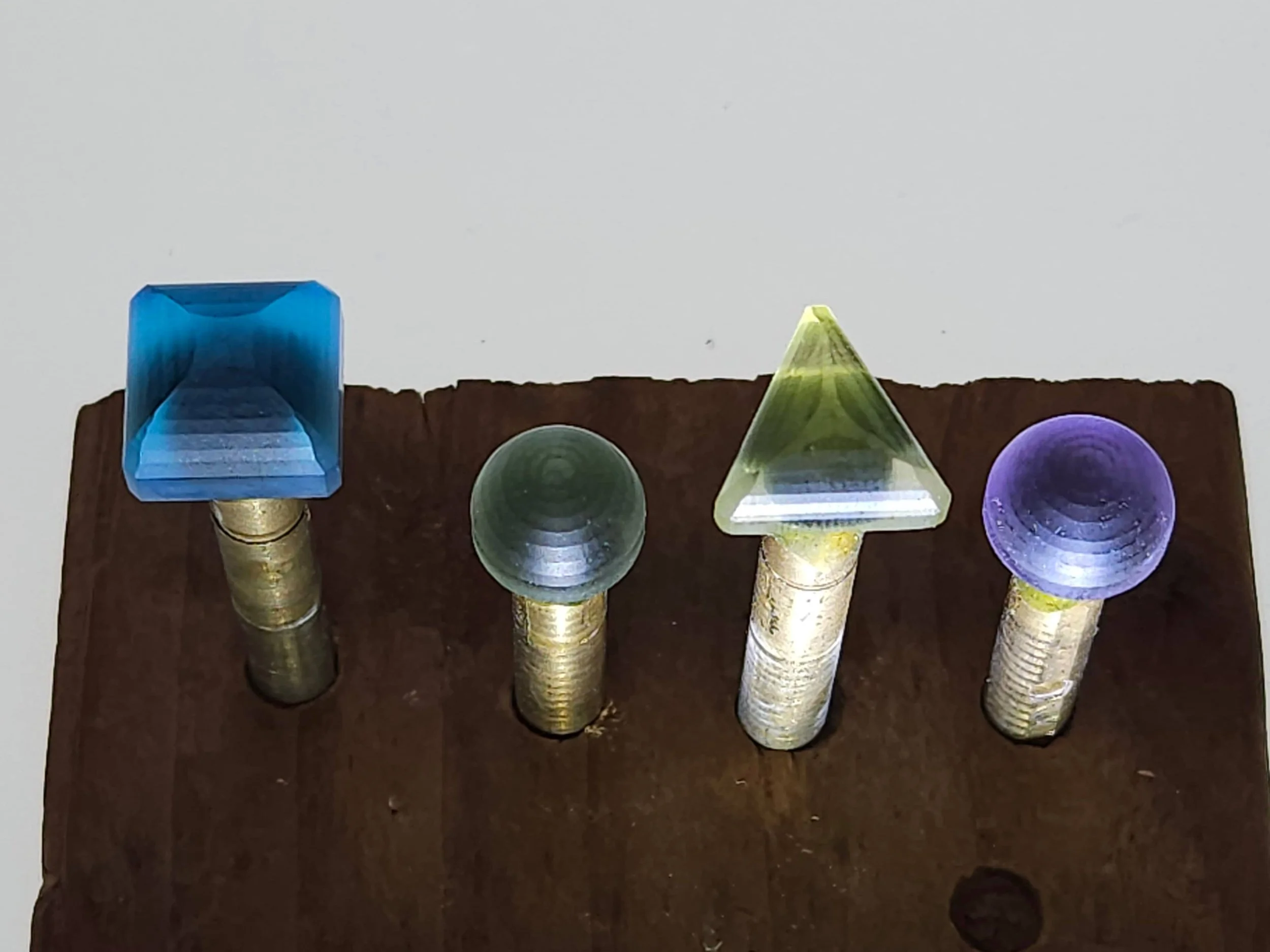
Cabbing and polishing the top dome—working through progressive diamond grit wheels from shaping to final shine.
Preforming the rough material into initial shapes—done either by hand or with precision using a faceting machine
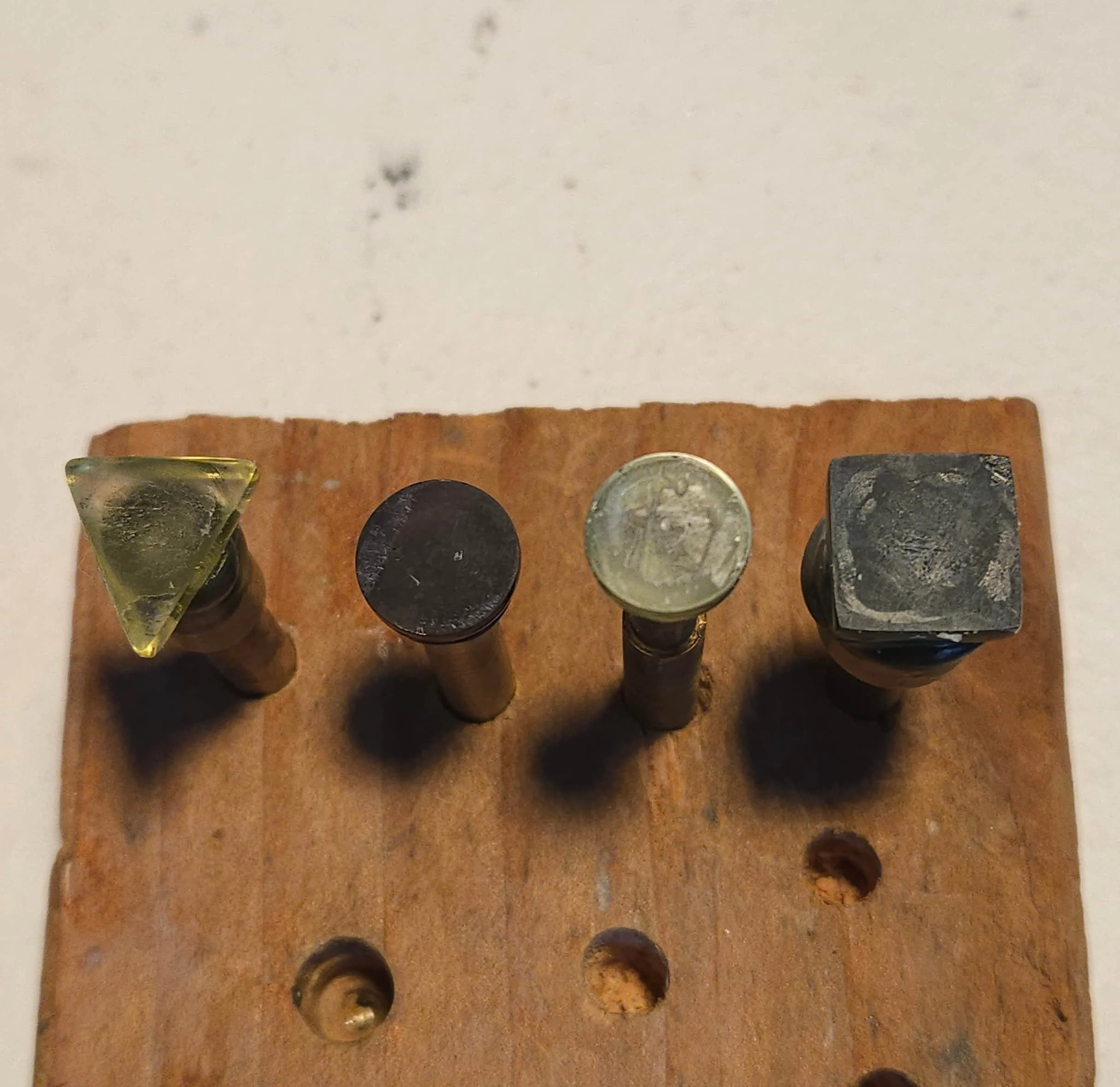
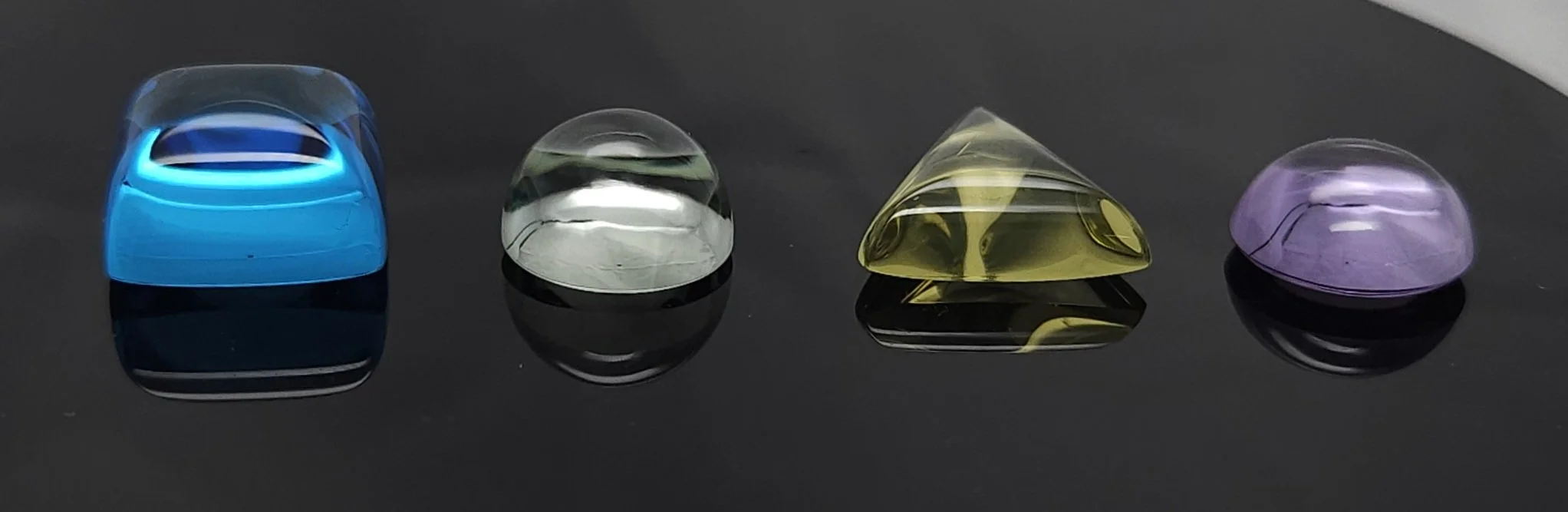
Transferring and re-dopping to finish the bottom: grinding and polishing the underside through the full cabbing progression.
Nothing beats the feeling of giving a finished cabochon its final clean—wiping away the polishing compound to reveal its true color, clarity, and shine.