Industrial Waste or Precious Stone? Faceting Sentimental Slag Glass
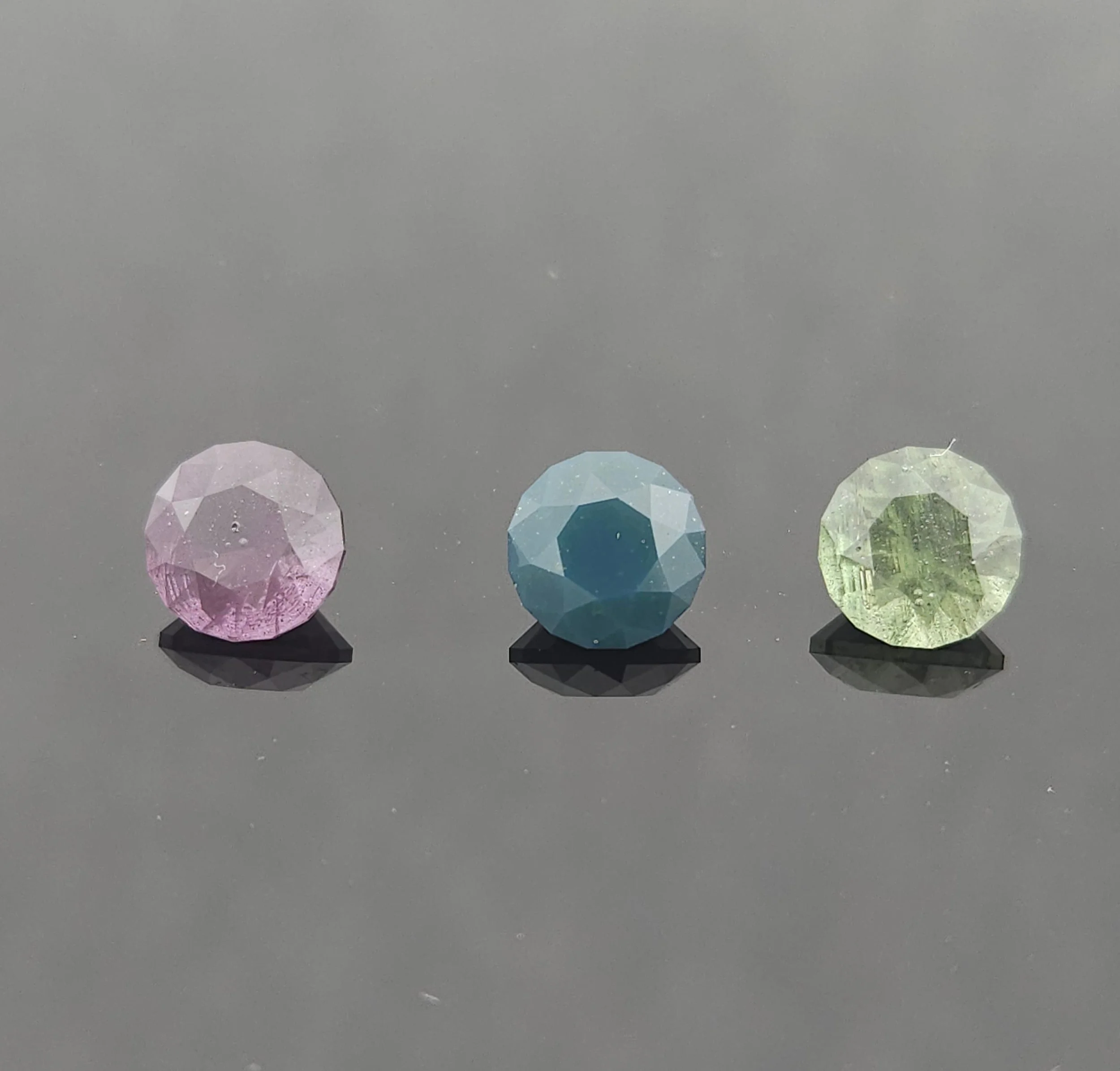
When a client brought in a few pieces of industrial slag glass they had collected on a trip with their significant other, I was thrilled to take on the project. While slag glass might technically begin its life as industrial byproduct, sentimentality turns it into something truly priceless.
Working with glass brings a unique set of technical hurdles compared to standard rough—namely internal stress, gas bubbles, and varying material inclusions. Fortunately, these are challenges I’ve tackled before, and with a few key adjustments to the setup, the rough transformed beautifully.
Overcoming the Technical Challenges
To keep the material stable and achieve crisp, clean facets, I adjusted my technique:
Lap Speed & Direction: Variable speed and directional control were essential to manage friction, prevent heat buildup, and keep inclusions from causing micro-fractures.
Lap Chemistry: Rather than relying on traditional oxides, I opted for diamond abrasives. This gave me precise control over the lap's surface chemistry and cut rate, ensuring the delicate glass didn't chip or pull along internal bubble walls.
The Cutting Sequence
To bring out the maximum brilliance and polish, I ran the material through a progressive four-step sequence:
250 Grit: Pre-shaping the rough to set the main silhouette.
500 Grit: Refining the facets and removing deep surface fractures.
3,000 Grit: Fine pre-polish to bring out clarity and ensure flat facet meets.
60,000 Grit on a BATT Lap: Final polish to achieve a mirror finish.
The Result
By taking the time to adapt to the material's quirks, I was able to deliver three perfectly calibrated gemstones out of a few chunks of industrial glass. It’s a great reminder that beauty in lapidary work isn't just about the monetary value of the mineral—it's about preserving a memory and turning something discarded into a treasure that will last a lifetime.